06 June 2025
Parting Peacefully: The Legal Path of Mutual Consent Divorce
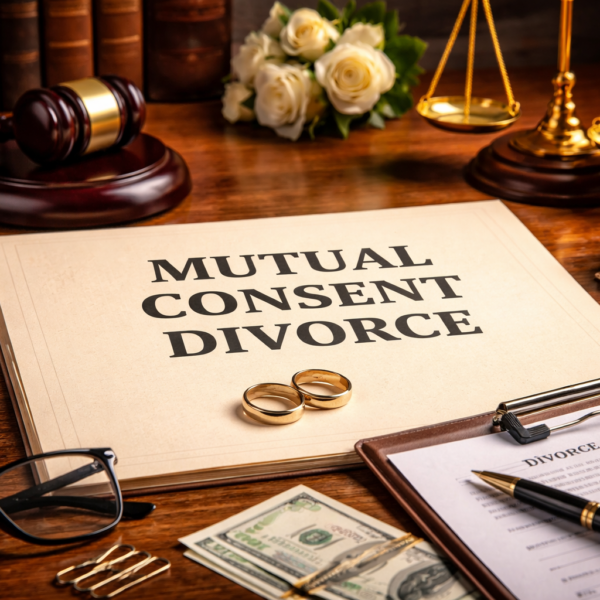
In the realm of family law, divorce is often viewed as contentious and emotionally draining. However, Mutual Consent Divorce offers a more amicable and dignified path for couples who have decided to end their marriage with understanding and respect.
What is Mutual Consent Divorce?
Mutual Consent Divorce is a legal procedure where both spouses agree to dissolve the marriage amicably, without blaming each other. It is governed under Section 13B of the Hindu Marriage Act, 1955, and similar provisions exist in other personal laws.
Key Requirements:
-
Mutual Agreement – Both parties must voluntarily agree to the divorce.
-
Separation Period – The couple must have lived separately for at least one year.
-
Incompatibility or Irretrievable Breakdown – Acknowledgment that cohabitation is no longer possible.
Core Aspects to Settle:
-
Child Custody (if applicable)
-
Alimony/Maintenance
-
Division of Property & Assets
The Legal Process:
-
First Motion Petition – Filed jointly in the family court with agreed terms.
-
Cooling-off Period – 6 months (can be waived under certain conditions).
-
Second Motion & Final Hearing – If both parties reaffirm consent, the court grants the decree of divorce.
Benefits of Mutual Consent Divorce:
-
Quicker and Cost-Effective
-
Less Emotional Trauma
-
Private and Respectful Proceedings
-
No Public Allegations or Blame Game
Conclusion:
Choosing Mutual Consent Divorce is a mature and collaborative decision. It allows couples to move on with grace, preserving mutual respect while legally parting ways. With the right legal guidance, this process becomes smoother and less confrontational—offering a fresh start to both individuals.