 31 March 2026
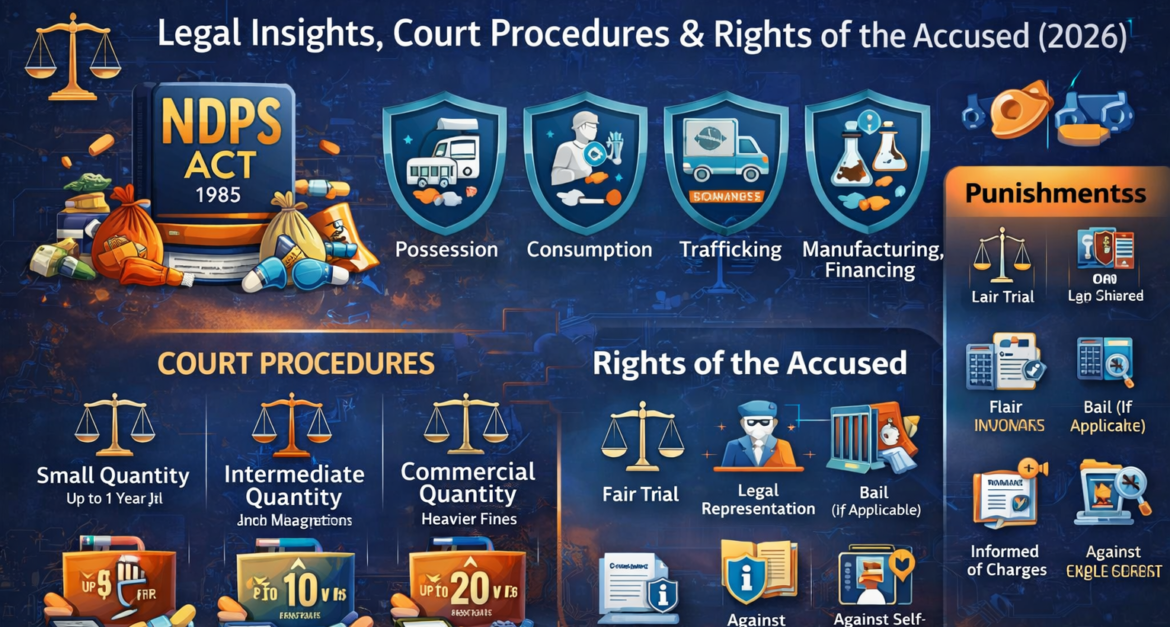
The rise in drug-related offences has made the Narcotic Drugs and Psychotropic Substances (NDPS) law one of the most stringent legal frameworks in India. Enforced through the NDPS Act, 1985, this legislation aims to control drug abuse and illegal trafficking while ensuring strict penalties for offenders. In 2026, with increasing surveillance and enforcement, understanding NDPS laws, associated offences, court procedures, and the rights of the accused is crucial for both individuals and legal professionals.
Understanding the NDPS Act in India
The NDPS Act governs offences related to narcotic drugs and psychotropic substances. It covers activities such as possession, consumption, production, sale, purchase, transport, and import/export of prohibited substances.
The law is strict because drug offences are considered a serious threat to public health and national security. However, the Act also provides safeguards to protect individuals from misuse of power by authorities.
Types of Offences Under NDPS Law
NDPS offences are categorized based on the nature and quantity of substances involved:
1. Possession of Drugs
Possession of illegal substances without authorization is punishable. The severity of punishment depends on whether the quantity is small, intermediate, or commercial.
2. Consumption of Narcotic Substances
Even personal consumption is a punishable offence, although penalties are relatively lighter compared to trafficking.
3. Drug Trafficking
Trafficking includes the sale, distribution, and transportation of drugs. This is considered a grave offence and attracts severe penalties.
4. Manufacturing and Production
Illegal production or cultivation of narcotic substances is strictly prohibited and heavily penalized.
5. Financing and Harbouring
Providing financial support or shelter to individuals involved in drug offences is also punishable under the Act.
Associated Criminal Offences
In addition to NDPS violations, several related offences may arise under other laws:
- Criminal conspiracy under IPC
- Money laundering under financial laws
- Illegal possession of assets linked to drug trade
- Cross-border smuggling offences
- Organized crime involvement
These associated offences can complicate legal proceedings and increase the severity of punishment.
Punishments Under NDPS Act
The NDPS Act prescribes stringent penalties depending on the quantity and nature of the offence:
- Small Quantity: Lesser punishment, including imprisonment up to 1 year or fine
- Intermediate Quantity: Moderate punishment, including imprisonment up to 10 years
- Commercial Quantity: Severe punishment, including rigorous imprisonment up to 20 years and heavy fines
Repeat offenders and organized crime cases may face even stricter penalties. Courts take these offences seriously due to their societal impact.
Court Procedures in NDPS Cases
NDPS cases follow a structured legal process. Understanding this procedure is essential:
1. Arrest and Seizure
The process begins with the arrest of the accused and seizure of substances by law enforcement authorities. Strict procedural compliance is required during search and seizure.
2. Filing of FIR
A First Information Report (FIR) is registered, detailing the offence and evidence collected.
3. Investigation
Authorities conduct a detailed investigation, including forensic analysis of seized substances and examination of witnesses.
4. Filing of Charge Sheet
After investigation, a charge sheet is filed before the court outlining the allegations and supporting evidence.
5. Trial Process
The trial is conducted in a Special NDPS Court. Both prosecution and defense present their arguments, evidence, and witnesses.
6. Judgment
The court delivers its judgment based on the evidence and legal provisions. If found guilty, the accused is sentenced accordingly.
Bail in NDPS Cases
Bail in NDPS cases is particularly challenging due to strict provisions under the law. Courts generally grant bail only if:
- There are reasonable grounds to believe the accused is not guilty
- The accused is unlikely to commit further offences
- Procedural lapses are identified
For commercial quantity cases, obtaining bail becomes significantly more difficult.
Rights of the Accused
Despite the strict nature of the NDPS Act, the accused has several legal rights:
1. Right to Fair Trial
Every accused person has the right to a fair and impartial trial.
2. Right Against Illegal Search and Seizure
Authorities must follow proper legal procedures during search and seizure. Any violation can weaken the prosecution’s case.
3. Right to Legal Representation
The accused has the right to consult and be defended by a lawyer.
4. Right to Be Informed
The accused must be informed of the grounds of arrest and charges against them.
5. Right to Bail (Where Applicable)
Although limited, the right to apply for bail remains available.
6. Protection Against Self-Incrimination
No person can be forced to confess or provide evidence against themselves.
Legal Defense Strategies in NDPS Cases
Effective legal defense can significantly impact the outcome of a case:
1. Challenging Procedural Violations
Any non-compliance with legal procedures during search, seizure, or arrest can be used as a defense.
2. Questioning Evidence
The defense may challenge the authenticity and handling of seized substances.
3. Lack of Conscious Possession
Proving that the accused was unaware of the presence of drugs can weaken the case.
4. False Implication
In some cases, individuals may be falsely implicated. Evidence supporting innocence is crucial.
5. Technical Defenses
Errors in documentation, delays in filing reports, or improper investigation can benefit the accused.
Recent Developments in 2026
In 2026, NDPS enforcement has seen several advancements:
- Use of digital tracking and surveillance
- Improved forensic testing methods
- Faster trial processes in special courts
- Increased focus on rehabilitation for minor offenders
These developments aim to balance strict enforcement with fair legal practices.
Importance of Legal Assistance
NDPS cases are complex and require expert legal handling. Professional legal assistance helps in:
- Understanding legal provisions
- Preparing a strong defense
- Navigating court procedures
- Protecting constitutional rights
Early legal intervention can significantly improve the chances of a favorable outcome.
Conclusion
NDPS and associated criminal offences are among the most serious legal matters in India. While the law aims to curb drug abuse and trafficking, it also ensures that the rights of the accused are protected.
Understanding the legal framework, court procedures, and available defenses is essential for anyone involved in such cases. In 2026, with stricter enforcement and evolving legal standards, awareness and timely legal action are key to ensuring justice and fairness.